Every time Google finds the shortest route, a bank verifies a transaction, or a streaming platform recommends what to watch next, an algorithm is working behind the scenes.
Algorithms now influence almost every part of modern life. They process payments, secure communications, organise data, train artificial intelligence models, and operate the software systems we depend on every day.
But the word algorithm did not begin with computers.
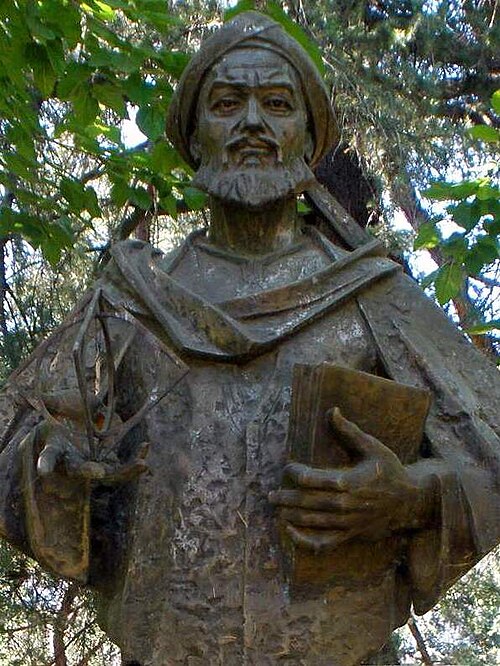
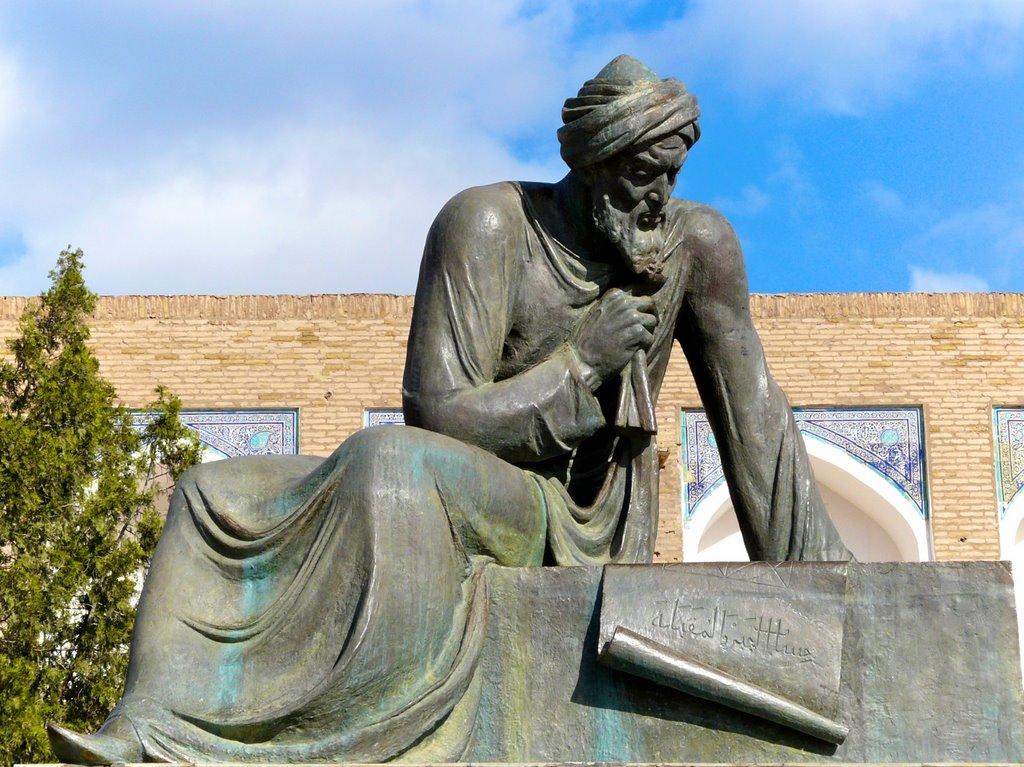
It comes from the Latinised name of a ninth-century Muslim mathematician, astronomer, and geographer: Muhammad ibn Musa al-Khwarizmi.
More than 1,200 years before modern programming languages, Al-Khwarizmi described clear, repeatable procedures for solving mathematical problems. His work helped establish algebra as a systematic discipline and spread decimal arithmetic across the medieval world.
In this post, we’ll explore who Al-Khwarizmi was, how his name became the word algorithm, what he contributed to mathematics, and why his way of thinking still matters to software developers today.
Why Al-Khwarizmi?
Al-Khwarizmi is often called the father of algorithms and one of the founders of algebra.
These titles should not be interpreted as saying that no one had used mathematical procedures before him. Ancient Babylonian, Indian, Greek, Chinese, and other mathematical traditions had already developed methods for solving different classes of problems.
Al-Khwarizmi’s importance came from something slightly different.
He organised mathematical knowledge into systematic, teachable procedures. Instead of presenting isolated answers, he showed how an entire category of problems could be solved through a sequence of repeatable steps.
That idea is at the heart of an algorithm:
A clearly defined procedure that accepts an input, performs a finite sequence of steps, and produces an output.
This is why his legacy feels remarkably familiar to developers. He was not writing software, but he was describing processes in a way that resembles how we design software today.
Who Was Al-Khwarizmi?
Muhammad ibn Musa al-Khwarizmi was born around 780 CE and died around 850 CE.
Very little is known with certainty about his personal life. His name suggests a connection to Khwarazm, a historic region in Central Asia located around parts of modern Uzbekistan and Turkmenistan.
He later worked in Baghdad during the Abbasid Caliphate, when the city was one of the world’s leading centres of scholarship, commerce, and scientific study.
Al-Khwarizmi wrote about several subjects:
- Mathematics
- Arithmetic
- Algebra
- Astronomy
- Geography
- Calendars
- Astronomical instruments
His most influential works, however, were his books on arithmetic and algebra.
The House of Wisdom
Al-Khwarizmi worked in the intellectual environment associated with Baghdad’s House of Wisdom, or Bayt al-Hikmah, during the reign of Caliph al-Ma'mun.
Scholars in Abbasid Baghdad studied and translated knowledge inherited from several civilisations, including Greek, Indian, Persian, and Babylonian traditions.
But they were not simply preserving old texts.
They examined previous discoveries, corrected calculations, developed new methods, and wrote original works that extended the scientific knowledge available at the time.
This environment allowed ideas from different mathematical traditions to meet. Al-Khwarizmi drew from that wider body of knowledge and presented it in forms that were practical, structured, and easier to teach.
His work is therefore an example of how innovation often happens:
- Existing knowledge is collected.
- Different ideas are compared.
- Useful principles are identified.
- The principles are organised into a reusable method.
- The method is documented so others can apply it.
For a software engineer, this process should sound familiar. It resembles how we turn experience, patterns, and requirements into an abstraction, framework, or reusable system.
From Al-Khwarizmi to Algorithm
The word algorithm ultimately comes from Al-Khwarizmi’s name.
One of his major arithmetic works explained calculation using the Hindu-Arabic numeral system. The original Arabic text has been lost, but versions of the work survived through medieval Latin manuscripts.
When his name was rendered in Latin, it appeared in forms such as Algoritmi or Algorismi.
The expression was initially associated with arithmetic using Hindu-Arabic numerals. This method of calculation became known in medieval Europe as algorism.
Over time, the meaning expanded.
Instead of referring only to decimal arithmetic, the word evolved into algorithm, meaning a defined procedure for solving a problem.
The journey can be simplified as:
Al-Khwarizmi
    ↓
Algoritmi — Latinised form of his name
    ↓
Algorism — Calculation using Hindu-Arabic numerals
    ↓
Algorithm — A systematic procedure for solving a problem
The name of a ninth-century scholar eventually became one of the most frequently used words in modern computer science.
What Makes Something an Algorithm?
An algorithm is more than a general idea or suggestion. It should describe a procedure precisely enough that someone else can follow it and consistently produce the expected result.
A useful algorithm normally has several properties:
- Input – The data or values provided to the procedure.
- Output – The result produced by the procedure.
- Defined Steps – Each operation must be understandable and unambiguous.
- Finite Execution – The procedure must eventually stop.
- Repeatability – The same valid input should follow the same defined process.
- Generality – The procedure should solve a category of problems, not only one example.
Consider a simple algorithm for finding the largest number in a list:
1. Read the first number and store it as the current maximum.
2. Read the next number.
3. If the number is greater than the current maximum, replace the maximum.
4. Continue until every number has been examined.
5. Return the maximum.
The same algorithm in Java might look like this:
public static int findMaximum(int[] numbers) {
    if (numbers == null || numbers.length == 0) {
        throw new IllegalArgumentException("Numbers must not be empty");
    }

    int maximum = numbers[0];

    for (int number : numbers) {
        if (number > maximum) {
            maximum = number;
        }
    }

    return maximum;
}
Al-Khwarizmi did not write Java or use modern algorithmic notation. But his mathematical writing shared the essential idea: define a sequence of operations that another person can follow to solve a class of problems.
The Hindu-Arabic Numeral System
Al-Khwarizmi did not invent the Hindu-Arabic numeral system. Its foundations were developed by Indian mathematicians before his lifetime.
His contribution was helping explain, systematise, and spread methods of calculating with this positional decimal system.
In a positional system, the meaning of a digit depends on where it appears:
7     = seven
70    = seven tens
700   = seven hundreds
7000  = seven thousands
This may appear obvious today, but positional notation made arithmetic dramatically more efficient than many systems that came before it.
The system also used zero as a placeholder:
205Here, zero communicates that there are no tens. Without a placeholder, distinguishing 205 from 25 would be much more difficult.
Through Arabic scholarship and later Latin translations, these arithmetic methods spread more widely across Europe. They gradually competed with and replaced calculation systems based heavily on Roman numerals and counting devices.
Imagine implementing multiplication, division, accounting, or scientific calculations using only Roman numerals. Modern computation would be nearly impossible without an efficient positional number system.
Al-Jabr: The Origin of Algebra
Al-Khwarizmi’s most famous book was:
Al-Kitab al-Mukhtasar fi Hisab al-Jabr wal-Muqabala
Its title is commonly translated as:
The Compendious Book on Calculation by Completion and Balancing
The word algebra comes from al-jabr, one of the operations described in the title.
In the context of equations:
- Al-jabr involved restoring or completing an equation by removing negative terms.
- Al-muqabala involved balancing or reducing corresponding terms on opposite sides.
Al-Khwarizmi presented systematic methods for solving linear and quadratic equations.
However, his algebra looked very different from ours.
He did not write:
x² + 10x = 39Symbolic algebraic notation had not yet been developed in its modern form. Problems and their solutions were explained using words, geometric reasoning, and numerical examples.
The unknown value might be described as a root or a thing, while its square would be described as a square.
Despite the absence of modern symbols, the underlying reasoning was structured and general.
A Classical Al-Khwarizmi Problem
One of the best-known equations associated with Al-Khwarizmi’s algebra can be written in modern notation as:
x² + 10x = 39Today, we can solve it by completing the square.
Step 1: Take half of the coefficient of x
The coefficient is 10.
10 ÷ 2 = 5Step 2: Square the result
5² = 25Step 3: Add it to both sides
x² + 10x + 25 = 39 + 25Therefore:
x² + 10x + 25 = 64Step 4: Express the left side as a square
(x + 5)² = 64Step 5: Take the square root
For the positive solution used in the practical context:
x + 5 = 8Step 6: Subtract five
x = 3The final result is:
x = 3What makes this important is not only the answer.
The method can be applied to an entire category of quadratic equations. Al-Khwarizmi was teaching a reusable procedure, not merely solving one isolated puzzle.
Expressing the Method as an Algorithm
For an equation in the form:
x² + bx = cAl-Khwarizmi’s procedure can be expressed in modern pseudocode:
INPUT b, c

half = b / 2
square = half × half
completedSquare = c + square
root = squareRoot(completedSquare)
result = root - half

RETURN result
The equivalent Java implementation could be:
public final class AlKhwarizmiSolver {

    private AlKhwarizmiSolver() {
    }

    public static double solvePositiveRoot(
            double linearCoefficient,
            double constant
    ) {
        double half = linearCoefficient / 2.0;
        double completedSquare = constant + (half * half);

        if (completedSquare < 0) {
            throw new IllegalArgumentException(
                    "The equation has no real solution"
            );
        }

        return Math.sqrt(completedSquare) - half;
    }

    public static void main(String[] args) {
        double result = solvePositiveRoot(10, 39);

        System.out.println(result);
    }
}
Output:
3.0This translation demonstrates the connection between mathematical reasoning and programming.
The original method was written rhetorically and supported geometrically. We can now encode the same procedure as a function that accepts input and returns a result.
Why His Approach Was Revolutionary
Al-Khwarizmi’s work helped shift mathematics toward systematic problem-solving.
Instead of asking:
What is the answer to this particular problem?
His method encouraged a more powerful question:
What sequence of steps can solve every problem of this form?
That change in perspective is fundamental to computer science.
A programmer rarely solves only one instance manually. We identify the structure shared by many instances and create a procedure that handles all of them.
For example:
- A sorting algorithm can organise many different lists.
- A routing algorithm can evaluate many different road networks.
- A consensus algorithm can coordinate many different distributed nodes.
- An encryption algorithm can protect many different messages.
- A database query planner can evaluate many different queries.
This transition—from solving an example to designing a method—is one of Al-Khwarizmi’s greatest intellectual legacies.
Algorithms Before Computers
Algorithms are often associated with software, but they existed long before electronic computers.
A cooking recipe is algorithmic:
1. Prepare the ingredients.
2. Heat the pan.
3. Add the ingredients in a defined order.
4. Cook for a specified duration.
5. Serve the result.
Long division is an algorithm.
Navigation instructions are an algorithm.
Procedures for inheritance calculation, land measurement, construction, astronomy, and trade can all be expressed algorithmically.
Computers did not create algorithms. Computers made it possible to execute algorithms at extraordinary speed and scale.
The same distinction exists between a musical composition and the instrument that performs it:
- The algorithm defines the procedure.
- The computer executes the procedure.
Al-Khwarizmi belonged to an age without electronic computation, but his work contributed to the intellectual tradition that made computation possible.
Beyond Algebra and Arithmetic
Al-Khwarizmi’s work was not limited to equations.
He also made important contributions to astronomy and geography.
Astronomy
He produced astronomical tables used for calculating information such as the positions of celestial bodies and calendar values.
Astronomical tables were important for:
- Timekeeping
- Calendar calculation
- Navigation
- Observing celestial events
- Supporting religious and civic requirements
These tables represented another form of structured computation: given a set of values and rules, a person could derive a predictable result.
Geography
Al-Khwarizmi wrote a geographical work commonly known as Kitab Surat al-Ard, or The Book of the Image of the Earth.
It contained coordinates for cities, regions, seas, mountains, rivers, and other geographical features. His work drew from earlier geography, including that of Ptolemy, while revising and extending parts of the available data.
A geographical coordinate system is also closely connected to modern computing.
Today, coordinates power:
- GPS navigation
- Digital maps
- Delivery platforms
- Ride-sharing applications
- Logistics systems
- Geospatial databases
The technologies are modern, but the need to represent the physical world as structured data is ancient.
How His Work Reached Europe
Al-Khwarizmi wrote in Arabic, the major scholarly language of his intellectual environment.
Centuries later, his works were translated into Latin as part of a wider movement that brought Arabic scientific and philosophical knowledge into medieval Europe.
His algebra book was translated into Latin during the twelfth century. Latin versions of his arithmetic methods also circulated among European scholars.
These translations helped spread two enormously influential ideas:
- Calculating efficiently with Hindu-Arabic numerals.
- Solving equations through systematic algebraic methods.
The impact continued through later mathematicians and writers, including scholars who developed more advanced symbolic notation and expanded algebra into the form we recognise today.
Al-Khwarizmi was therefore not the final point in the history of algebra or algorithms. He was one of the most important links in a much longer chain of knowledge.
Common Misconceptions
Al-Khwarizmi’s legacy is sometimes simplified to the point of becoming historically inaccurate.
Here are several misconceptions to avoid.
- Al-Khwarizmi Invented Every Form of Algorithm
Step-by-step mathematical procedures existed in several ancient civilisations before Al-Khwarizmi.
His importance comes from systematically explaining influential arithmetic and algebraic methods, as well as from the fact that the word algorithm developed from the Latinised form of his name.
- He Invented Zero
Zero and positional decimal notation developed through earlier Indian mathematical traditions.
Al-Khwarizmi helped explain and transmit arithmetic based on that system.
- He Created Algebra Entirely by Himself
Algebraic reasoning existed before Al-Khwarizmi in Babylonian, Greek, Indian, and other traditions.
His achievement was organising algebra into an influential systematic treatment that helped establish it as a distinct area of study.
- He Used Modern Algebraic Symbols
Al-Khwarizmi did not write equations using symbols such as x, +, or =.
He described mathematical relationships using words and geometric demonstrations.
- His Work Directly Created Computer Programming
There is no direct historical line in which Al-Khwarizmi designed anything resembling a modern computer program.
His legacy is conceptual and linguistic. His methods belong to the broader history of systematic computation from which modern computer science eventually emerged.
Lessons for Software Developers
Al-Khwarizmi’s work offers several lessons that remain relevant to engineers.
1. A Method Is More Valuable Than a Single Answer
Solving one production incident is useful.
Developing a repeatable diagnostic procedure that prevents or resolves an entire category of incidents is more valuable.
2. Clear Documentation Scales Knowledge
An idea can disappear if it remains only in one person’s mind.
Al-Khwarizmi’s influence survived because mathematical methods were organised, written down, taught, translated, and improved by later generations.
The same principle applies to:
- Architecture Decision Records
- Runbooks
- RFCs
- API documentation
- Operational playbooks
- Engineering guidelines
3. Abstraction Creates Reusability
A good algorithm ignores irrelevant details and captures the essential structure of a problem.
A good software abstraction does the same.
4. Practical Problems Can Produce Foundational Ideas
Al-Khwarizmi’s algebra addressed practical needs involving trade, inheritance, land measurement, construction, and other everyday calculations.
Many important software systems also begin with practical problems rather than abstract theory.
5. Innovation Includes Synthesis
Not every major contribution begins with knowledge created entirely from nothing.
Collecting existing ideas, correcting them, organising them, and making them accessible can transform the course of a discipline.
Al-Khwarizmi’s Legacy in Modern Computing
Al-Khwarizmi never saw a mechanical calculator, transistor, programming language, or data centre.
Yet his name appears—indirectly—whenever developers discuss algorithms.
Modern computing depends on algorithmic procedures for almost everything:
- Search engines rank pages.
- Databases build indexes and execute query plans.
- Distributed systems replicate data.
- Cryptographic systems protect information.
- Compilers transform source code.
- Machine learning systems optimise models.
- Navigation platforms calculate routes.
- Operating systems schedule processes.
- Compression algorithms reduce file sizes.
- Recommendation systems predict user interests.
The scale has changed enormously, but the underlying idea remains recognisable:
Understand the problem, define the steps, execute them in order, and produce a result.
Final Thoughts
Calling Al-Khwarizmi the father of algorithms does not mean that he invented every step-by-step procedure in human history.
His deeper contribution was helping transform mathematical problem-solving into systematic, reusable, and teachable methods.
His arithmetic work helped transmit the Hindu-Arabic numeral system. His algebra book gave us the word algebra. The Latinised form of his name eventually gave us the word algorithm.
More than twelve centuries later, developers still follow the intellectual pattern represented by his work:
- Define the problem.
- Identify the inputs.
- Break the solution into precise steps.
- Apply the method consistently.
- Verify the output.
- Improve the process.
The machines are new.
The languages are new.
The scale is new.
But the principle behind them is ancient.
Every time we turn a problem into a reliable sequence of steps, we participate in a tradition that Al-Khwarizmi helped shape.